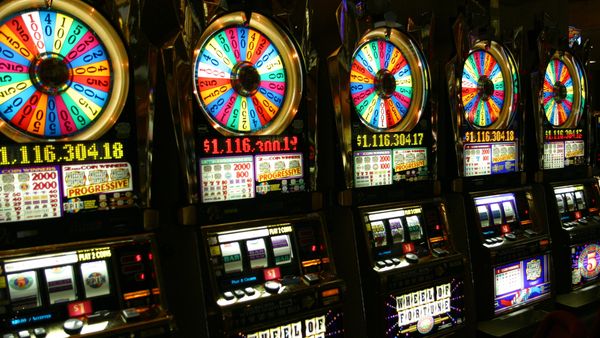
In 1974, Daniel Kahneman and Amos Tversky published an experiment that has quietly shaped every price tag you have seen since. Participants were shown a spinning wheel — rigged to stop at either 10 or 65 — and then asked to estimate the percentage of African countries in the United Nations. The wheel had nothing to do with the question. But participants who saw 65 gave significantly higher estimates than those who saw 10.
This is anchoring: the human tendency to rely disproportionately on the first number encountered when making subsequent numerical judgements. It is not a quirk that disappears with education or awareness. It persists in experts, in doctors estimating treatment costs, in judges determining prison sentences. It is structural.
The Original Price as Anchor
The most visible retail application of anchoring is the “was / now” price display. By showing an original price — even one that the item was never actually sold at — retailers establish a reference point that makes the current price feel like a bargain. The specific ratio matters: anchors that are too high feel implausible and are rejected; anchors that are 30–50% above the sale price produce the strongest perceived-value effect.
Key Takeaways
- Anchoring is a structural cognitive bias — it persists regardless of expertise or awareness.
- “Was / now” price displays are most effective when the anchor is 30–50% above the sale price.
- The three-option menu structure creates a cognitive environment that makes the mid-range option feel chosen, not default.
- Left-digit anchoring causes prices ending in 9 to be encoded as categorically lower than round numbers, even when the difference is one penny.
- Anchors that feel implausible are rejected; effective anchors sit at the boundary of believability.
Research by Eric Anderson and Duncan Simester found that sale framing increased purchase probability even when the discounted price was identical to competitors’ standard price. The anchor created perceived value that the actual price could not.
The Three-Price Menu
Restaurant menus and product pages routinely use a three-option structure: a budget option, a mid-range option, and a premium option. This is not to serve the full spectrum of customer preferences. It is to make the mid-range option look precisely correct.
The premium option anchors the mid-range. The budget option makes the mid-range feel like the sensible, non-extravagant choice. Without the premium anchor, the mid-range feels expensive. Without the budget anchor, it feels like the minimum acceptable option. The three-price structure generates a specific cognitive environment in which the mid-range option feels chosen rather than default.
Left-Digit Anchoring and the 9
Prices ending in 9 — £9.99, £99, £399 — are a well-documented example of left-digit anchoring. The brain reads numbers from left to right and encodes the first digit as the most significant. £9.99 is encoded as “nine-something,” not as “approximately ten.” The difference between the two encodings is entirely psychological — the cash outflow is a penny — but it persists across cultures and income levels.
A study of supermarket scanner data involving 86 price points found that prices ending in 9 outperformed prices ending in 0 or 1 even when the 9-ending price was higher in absolute terms. The anchor wins.
Key Takeaways
- Anchoring is a structural cognitive bias — it persists regardless of expertise or awareness.
- “Was / now” price displays are most effective when the anchor is 30–50% above the sale price.
- The three-option menu structure creates a cognitive environment that makes the mid-range option feel chosen, not default.
- Left-digit anchoring causes prices ending in 9 to be encoded as categorically lower than round numbers, even when the difference is one penny.
- Anchors that feel implausible are rejected; effective anchors sit at the boundary of believability.
Claire Ashford
Claire Ashford is a science and economics journalist who specialises in finding the mathematical patterns hiding inside culture, sport, and commerce.